5 min read
Halloween marketing in 2026: what consumer data says about seasonal shopping
Halloween has outgrown its American roots. In the run-up to 31 October, costumes, decorations, themed parties and social content fill shopping calendars in Europe and in Türkiye’s big cities too. For marketers, it is also one of the clearest windows into how consumers decide, plan and spend around a seasonal moment.
We brought together the latest figures from four markets and summarised what brands entering new markets can learn from them.
Halloween 2026 in numbers
| Market | Key figure | Source |
|---|---|---|
| United States | $13.5bn total spending, $115.14 per person, 74% plan to celebrate | NRF, Sept 2026 |
| Germany | c. €537m retail sales, +3.3% year on year, +69% vs 2019 | HDE via Lebensmittel Praxis, Oct 2026 |
| Netherlands | One in five Dutch people celebrate Halloween | Motivaction Feestdagenmonitor |
| Türkiye | Mainly an urban entertainment and social event, largely detached from its religious roots | Uğurluer, Seven & Aysel, 2023 |
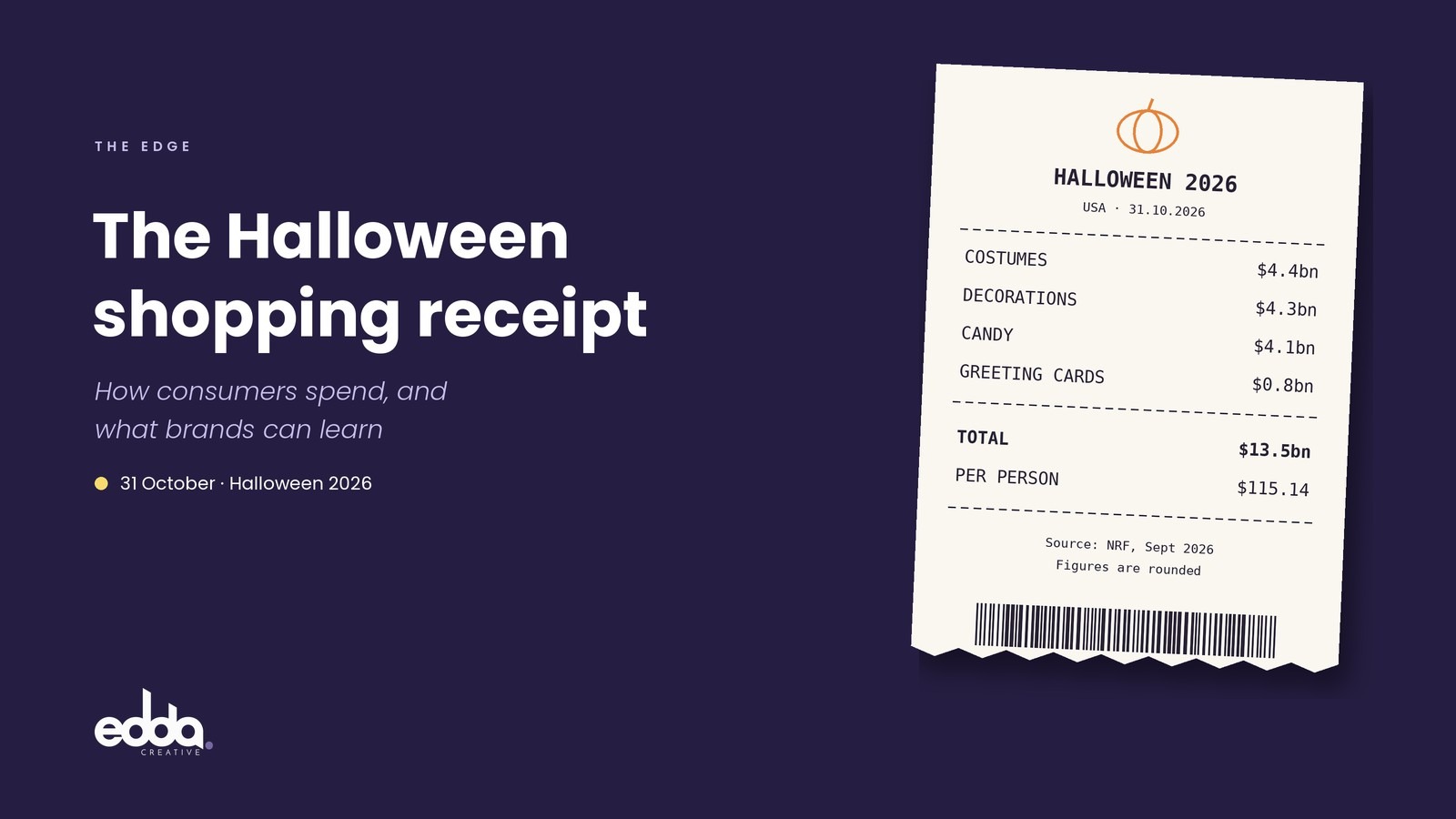
Where the money goes in the US
| Category | Share planning to buy | Total spending |
|---|---|---|
| Costumes | 71% | $4.4bn |
| Decorations | 78% | $4.3bn |
| Candy | 96% | $4.1bn |
| Greeting cards | 42% | $0.8bn |
Source: NRF Halloween survey, September 2026 (Prosper Insights, 7,889 consumers).
Almost everyone buys candy, but costumes take the biggest share of the budget. Halloween is less about buying products and more about buying a role and an experience. Back in 1990, consumer researcher Russell Belk described Halloween as “an evolving American consumption ritual”, and the data still fits.
Five things consumers do at Halloween
- 1. They start early. 49% of US consumers begin their Halloween shopping in September or earlier, up from 34% in 2016. A campaign that starts in the last week of October misses most of the decisions.
- 2. They search for ideas before products. 32% look for costume ideas online. People first ask “what should I be?” and only then look for a product. Inspiration comes before the catalogue.
- 3. They use AI to plan. According to NRF, 47% of consumers use AI platforms and tools for their Halloween shopping: 34% to brainstorm and plan, 32% to get recommendations during product research. Being described correctly by AI assistants is now part of brand visibility.
- 4. They turn to local and small businesses. 13% plan to buy from local and small businesses, almost double the 7% of 2016. People want an experience and a personal touch.
- 5. They stay price-conscious and shift spending. Discount stores are the top destination at 39%. In Germany, consumers plan to spend more on decorations, food and drinks this year, and less on confectionery and make-up. They are not cutting back; they are changing priorities.
One date, different consumers
Netherlands: Halloween is growing, but it shares the stage. Just eleven days later, on 11 November, comes Sint-Maarten, when children walk from door to door with lanterns (lampionnen), singing songs in exchange for sweets (Museum Catharijneconvent). According to Motivaction, Halloween is mainly celebrated by families with young children and by (young) adults who go to events and themed parties or join in on social media.
Türkiye: Researchers at Yaşar University analysed 82 Halloween event posters from online ticketing platforms in Ankara, Istanbul and İzmir. They found that Halloween is mainly promoted by the entertainment sector as a party and social event, using classic symbols such as pumpkins, witches and skeletons that are largely detached from their religious and cultural meaning. It is a meaningful season for young urban adults, venues, cafés, entertainment and fashion brands, but not a day everyone celebrates.
Germany: HDE expects Halloween sales to be about 69% higher than in 2019, while the share of people planning to spend money dipped slightly, from 15.2% to 14.9%. Fewer people, spending more each: a classic sign of a maturing niche.
For an international brand, the lesson is simple: the same date can mean a family ritual in the US, a nightlife event in Istanbul and a run-up to a children’s lantern tradition in the Netherlands.
Six lessons for seasonal campaigns
- Start early: if decisions are made in September, inspiration content should be live by late August and the campaign ready by early September.
- Read each market separately: one date, three different consumers. We explore this further in decoding consumer behaviour in global markets.
- Sell the experience, not just the product: consumers are buying a role and a story, so think in costumes, décor, events and shareable moments.
- Show real people: in a season flooded with AI-generated visuals, real faces and real moments stand out. See The illusion of perfection.
- Plan for search and AI visibility: is your brand there when people look for ideas? Content that answers real questions performs well in search and in AI assistants. See AI and curiosity.
- Measure and keep notes: which content, channel and day worked? This year’s data is next year’s campaign plan. For budgeting, see social media management cost.
How Edda Creative helps
With our team in Amsterdam and Ankara, we support brands entering new markets with strategy, local adaptation, content and design for seasonal campaigns. We plan how one message can be told differently in Türkiye, the Netherlands and other international markets. Sales and customer relationships stay with you; we make sure your brand shows up at the right time, in the right language and with the right tone. Learn more on our business development and marketing consultancy page.
Want to plan next season’s campaign calendar together? Email us at info@eddacreative.com with a short description of your project.
Frequently asked questions
When is Halloween?
Halloween is celebrated every year on 31 October. In 2026, it falls on a Saturday.
How much will Americans spend on Halloween in 2026?
NRF expects total spending of $13.5 billion, or $115.14 per person. 74% of consumers plan to celebrate.
What do people spend the most on at Halloween?
In the US, costumes are the biggest category ($4.4 billion), followed by decorations ($4.3 billion) and candy ($4.1 billion).
Is Halloween celebrated in the Netherlands and Türkiye?
Yes, but differently. One in five Dutch people celebrate Halloween, and the Dutch also celebrate Sint-Maarten on 11 November. In Türkiye, Halloween is mainly an entertainment and party season in large cities.
When should brands start Halloween campaigns?
About half of US consumers start shopping in September or earlier. Aim to have inspiration content live by late August and the campaign ready by early September.
Figures compiled from the organisations’ published data as of 29 October 2026.
Sources
- NRF – Halloween survey press release (22 September 2026)
- HDE 2026 Halloween forecast – Lebensmittel Praxis (22 October 2026)
- Motivaction – Feestdagenmonitor Halloween report
- Uğurluer, S., Seven, M. & Aysel, K. (2023). The Local Shadows of a Global Specter: An Analysis of Halloween in Türkiye. Gümüşhane University e-Journal of Faculty of Communication, 11(2)
- Museum Catharijneconvent – Sint Maarten press release (2022)
- Belk, R. W. (1990). Halloween: An Evolving American Consumption Ritual. Advances in Consumer Research, 17